My family is a small family. My parents just have two children, both of them are girl, that is my sister and I. I am the eldest child.
Sixteen years ago, something happened so my parents have split up. My sister and I live with my mother, I call her Bunda (Mummy). Since that time, my family became smaller with three people inside.
↑My Sister, Mummy, and I↑
After my wedding on January 25th of 2009, the number of my family was bigger. Because, be sides my husband join my family, my husband’s parents become one of my family, too.
Mama and Papa, my husband’s parents, have four children. Three boys, one girl. The eldest boy and the girl has been married, the second boy is still single, and the youngest boy – my husband – has married, too. They have five grandchildren. I don’t have any child to be their grandchild yet. (^_^ => please pray for me!)
↑My Husband and I between Mama and Papa↑
Now, my husband and I live separately from our parents. We live in this house just for the two of us, So romantic. (^_~)
Thursday, December 03, 2009
My Family


Tuesday, September 29, 2009
Why do We Call It “KOREA”?
After we talked over the story behind the name of “CHINA” and “JAPAN,” now we’re talking over Korea for this turn.
The country that was separated to 2 country is located in Korea Peninsula, border on Japan, Russia, and China.
The country that is a neighbour country of China and Japan has an endonym name which isn’t same with its exonym name that we know, that is 한국/조선 ( Han Guk/韓國 ).
The meaning? No else than “Han Country.”

Well, why do we call this country with “KOREA”?
The name “KOREA” derives from the biggest leader period in Korea, the Goryeo Period (935AD-1392AD).
The Chinese called the name of the period to refer the country. They spell the name with cauli. that spelling came to be spelled Corea and Korea in Europe and other countries.
In Korean language (Han Guk O), South Korea is called 대한 민국 (Dae Han Min Guk/大韓民國) or abbreviated by 한국(Han Guk/韓國). In international forum, this country is called “Republic of Korea.” And this country is called 남조선 (Namchosŏn/南朝鮮) or “South Chosŏn” by North Korean people.
Meanwhile, North Korea (Democratic People’s Republic of Korea/DDRK), is called 조선민주주의인민공화국 (Chosŏn Minjujuŭi Inmin Konghwaguk) or abbreviated by 조선 (Chosŏn), taken from the name of last leader period who led Korea, Joseon Period (1392AD-1897AD). The South Korean people call this country 북조선 (Pukchosŏn) or “North Chosŏn.”
That’s the story behind the name of “KOREA” (^_^)
Sources: Several sources.
Wednesday, September 09, 2009
How is the Beginning of the Name of “JAPAN”?

Japan is a country which is located on eastern Asia continent. It has homogeneous people, the Ainu tribe. Japan is well-known by a developed country because of technology but still keeping its local cultures. The native people of Japan call their country by 日本 (Nippong/Nihong) which means “the sun’s origin/the land of the rising sun”).
Hmm, then how could it be JAPAN?
It’s related to the Meiji Restoration. As we know, before Meiji held the power of Japan (1868-1912), Japan was a country that be closed to the outsider because its leader, Tokugawa Shogunate, didn’t like the influence of outsider to Japanese cultures. That’s why, the country outside Japan knew Japan from its neighbourhood country, China.
In Chinese, the national language of China, the letter 日本 is read by “Ri Ben” (/:ze pen/). Can you see the connection? Yes, and Marco Polo wrote that spelling with the word “Cipangu.”
In ancient Malay, this country is called by “Jepang” adopting from the Chinese. This name of Japan in ancient Malay was brought to Europe by Portuguese merchant and rounded into several name of Japan like Japon (French), Japan (English), Giaponne (Italian), Japão (Portuguese), and so on.
The official name of this country until the end of world war II was 大日本帝國 (Dai Nippon Teikoku/Great Empire of Japan). But, now the official name of this country is 日本国 (Nippon Koku/Country of Japan).
Sources: Several sources
Tuesday, September 08, 2009
Where is the Name of “CHINA” from?
Everybody knows where China is. A land in the “middle” of Asia Continent. This country has the largest population in the world. The citizens has yellow skin and crescent eyes.

Do you know that “China” is an exonym word for this country? (*Exonym = a name for a place that is not used within that place by the local inhabitants; Endonym = the name used by people or locals themselves)
Meanwhile the endonym word for ‘China’ is 中国/中國 or “Zhōngguó” (read: chung kuo) means ‘Middle Kingdom’ (中/Zhōng /:chung/ = middle/centre; 国/Guó /:kuo/ = country/kingdom).
Then how do this thing become “CHINA”?
The word “china” came from the word CIN, a Persian name for this country that was popularized in Europe by Marco Polo. It also came from Sanskrit word for this country, Cīna. This word was recorded in 5th century BC in Mahābhārata, where it refers to a “yellow-coloured” barbarian tribe from the north.
This tribe is conventionally identified with Qin (秦 /:cin/), dinasty who led China in 221 BC-206 BC.
In Latin, the word China was historically referred to as Sinia (hence ”sino-”).
Now, the official name for this country is 中华人民共和国 or “Zhōnghuá Rénmín Gònghéguó” (/:chunghua zenmin konghekuo/) which means “Republic of Chinese People” or abbreviated by 中国/Zhōngguó.
That is the history behind how we call this country CHINA.
Source: Several sources
Tuesday, August 18, 2009
Baralek, The Wedding Ceremony in Minang Tradition
After succeed holding the Basanding Ceremony (Wedding Ceremony in Banjar Tradition), we held the wedding ceremony in Minang Tradition which called by Baralek.
Baralek, literally means 'a party/ceremony', like Basanding (sitting together), Baralek is held as a graceful because one of the kid in the family had married.
Usually, Baralek was held as a big party and held in the hall, it used to called by Baralek Gadang (Baralek=party, Gadang=big). But, since we held baralek as not big party, so we called it Baralek, with no 'gadang' (^_^)
The Baralek that we held, was held by Agam style.

First, the ceremony was held with Mendoa (praying together)

After that, the Baralek (^_^)


Anak Daro (The Bride)
Marapulai (The Bridegroom)
The Family of Marapulai
The Family of Anak Daro
The Whole Family
The other pictures can be seen at Facebook, at Friendster, or at Multiply.
Sunday, March 01, 2009
Basanding : A Wedding Ceremony in Banjar Tradition
As I've been the wife of my husband officially, who had spoke the vows in the Holy Matrimony on January 25th of 2009, the big family held a wedding ceremony to show how thankful we are. In Banjar tradition, that ceremony is called by 'Bansanding' or 'Batatai.' The meaning of 'Basanding' is sitting on state, and 'Batatai' has a literal meaning of sitting together, just you and me.
The ritual of basanding/batatai actually is the climax of the series of the wedding ritual in Banjar tradition. Another ceremony are Basasuluh, Badatang/Bapara, Bapapuyuan, Baantar Jujuran, Akad Nikah, Bapingit, Bapacar, Badudus/Bapapai, Batamat Quran, Maarak Pangantin, Basanding, dan Basujud. InsyaAllah I will post all of those ceremonies as articles in this blog.
There was no protocol on this ceremony, because we didn't hold it in Banjarmasin, we held it in Pamekasan, Madura. But the ceremony was held successfully, even there was rain that came to the wedding. (^_~)
Like another Basanding ritual, we did the basuap/basasuap ritual too. The ritual when we had to feed our couple with the hadap-hadap rice and padapatan rice.

After all rituals were done successfully, we took our picture together. Alhamdulillah, this ceremony was held successfully.
I hope, a life that I will live is as success as this ceremony. Amiin... (^_~)


The other pictures can be seen at facebook, at friendster, or at Multiply.
Thursday, February 05, 2009
Pitaya (Dragon Fruit)
For you, fellows, I'll give you something I brought from my last vacation.
That is PITAYA (Dragon Fruit)
Pitaya (or in Indonesian called Buah Naga -Dragon Fruit) is the fruit of several cactus species, most importantly of the genus Hylocereus (sweet pitayas). (Open the Wikipedia for further information).
Native to Mexico, Central and South America, the vine-like epiphytic Hylocereus cacti are also cultivated in Southeast Asian countries such as Taiwan, Vietnam, Thailand, and Indonesia.
In Indonesia, Pitaya can be found in several county, such as Madura Island. Condition and structure of Madura land makes the Pitaya grows healthy. The land in Madura consists of very much calcium, magnesium and another minerals. It makes the Pitaya grows healthier and has sweeter taste than the Pitaya which grows in Java Island.
The Pitaya that can be found in Madura is from genus Hylocereus undatus, it has red-skinned fruit with white flesh. It tastes like a pear. Sweet and fresh.
A Pitaya tree can live until ± 20 years, and has fruits in ten months of a year.
A two weeks fruit that has red skin can be picked.


Pitaya is more delicious if we eat it tomorrow. A brand new picked Pitaya has sour taste, but the taste will be gone by the day. Pitaya from Madura has a plus thing than Pitaya from Java. Pitaya from Madura can be eat until 20 days after picking. ten days longer that Pitaya from Java (just hold until 10 days). It will hold longer if we put it in refrigerator.
Pitaya is good for cholesterol and diabetics person. Because Pitaya is from cactus, Pitaya is believed consists vitamin C, beta carotene, calcium, and carbohydrates. This fruit also has high fiber for antioxidant. The blended skin of Pitaya can be a face mask, because it consists of much vitamin E.
Sunday, January 04, 2009
Asta Tinggi, Part II
Thanks to Areep for the idea of the route to Asta Tinggi. Although I'm not sure I can write the route like what you want. Because, I'm very bad in navigation. (Don't ever ask me where the west direction or east direction. I will never know where it is! ^0^)
We'll start it with the easiest way, okay..
To traveling to Asta Tinggi, after we arrive at the Gate of Sumenep City, just has 3 turns. Turn left, turn left, and turn right. I mean it! ^_^
After we arrive at the Gate of the Town, we just follow the main road, until we find The Downtown Monument. (If we saw the monument, we are in the downtown yet, The Sumenep People call the circle around the monument with "Downtown").
And then we turn left, and don't care about intersections until we meet a road where make us to turn left. ^_^ Why? Because it does like that. It's just a main road which turns left. ^0^
And then we will across the Bridge of Kebonagung above the Kebonagung River.
When we arrive at the bridge, it means we have just one step remain to Asta Tinggi. We just look for the sign. There is a sign to turn right to Asta Tinggi.
The road to Asta Tinggi is so abrupt. So, if you are new in driving, just be careful. It's Asta Tinggi, anyway. The high location graveyard.
In outside of Asta Tinggi area, it's not just the graveyards of the kings which can be seen. There is a cave from calcium, the cave goes to the edge of Kebonagung River.
The cave named Gua Jeruk (Gua=cave, Jeruk=orange the fruit)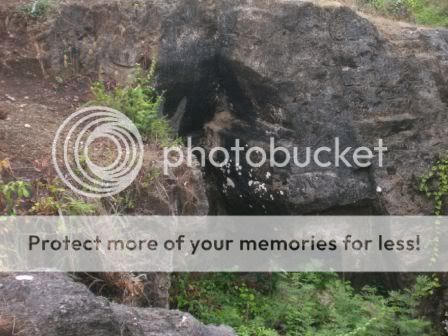
When I was a kid, I entered often entered the cave, and I would show up at the edge of the river and go home. I loved to enter the cave, It just like I was Indiana Jones. Full of adventures.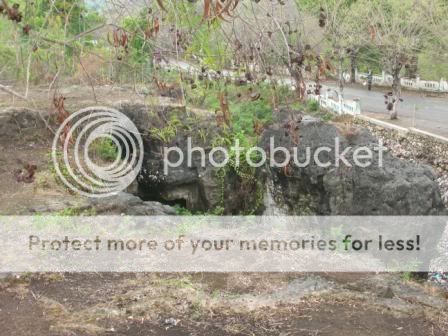
But shame, Gua Jeruk is no more in cares. I don't know why the cave is not being an object of tour. It's full of rubbish now.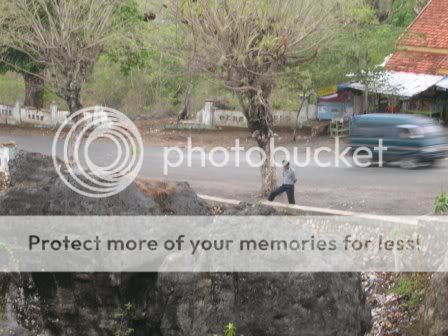
I am so sad, looking to the cave that's being a trash bin by the people around the Asta Tinggi. If we looked at to the trash, who will enter the cave then?.
I hope, The Government of Sumenep will care of the cave. It's a potential object for the tourism.You can also read this article in Indonesian, here...
Anda juga dapat membaca artikel ini dalam Bahasa Indonesia, di sini...
Saturday, January 03, 2009
Asta Tinggi: The Graveyard of The Kings of Sumenep
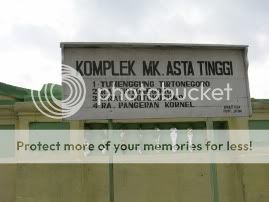
After holding Baantaran ceremony in Sunday (November 2nd), the day after (Monday, November 3rd), we took the in-laws to travel around Madura island. We when to Asta Tinggi, the graveyard of the kings of Sumenep.
Located in Sumenep, on the top of hill, Asta Tinggi is dedicated to be a graveyard of the Kings of Sumenep and their descendants.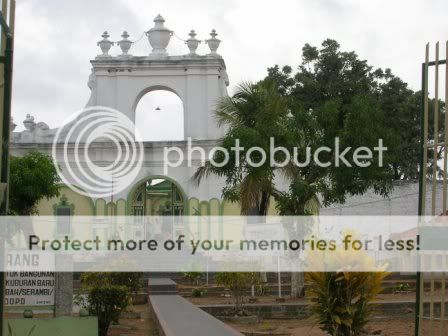
Asta Tinggi (Asta=Grave,Rest Area), consists of three parts of graveyard. The first is lower graveyard, that is the graveyard which is dedicated to the lower noble people. The ones who "only" has "Raden" on their name, have right to be buried in here.
The second is, outside graveyard, for middle noble, -which I don't know what noble it is-, But the fact is they're not the straight descendants of the Kings of Sumenep.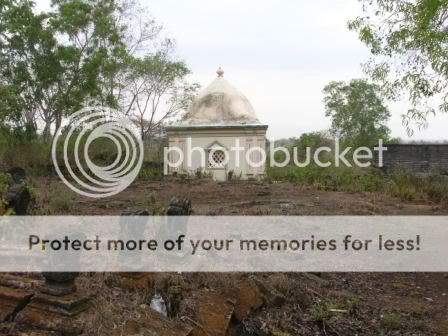
I don't know why, but this graveyard looks like old graveyard and not taken care. Maybe it's because there's no one who has right to be buried here.
And the last one is, inside graveyard, where the descendant of the Kings be buried.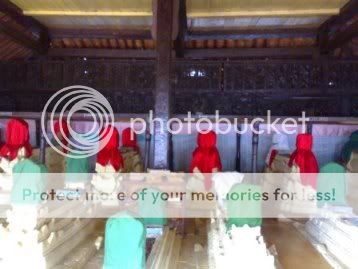
People who've been buried here are the straight descendants of the Kings of Sumenep. Usually their noble are Raden Panji, Raden Bagus, and Raden Aju (Raden Ayu, in Sumenep, there is no noble of Raden Ajeng, there is Raden Aju which is read by Dinaju)
So many things we can learn in Asta Tinggi, such as the Kings of Sumenep's history. Because in this graveyard there are graves of famous Kings of Sumenep i.e. Pangeran Jimad, Bindara Saod, and Pangeran Panji Pulang Jiwa. (This last one has made me peevish! Later I'll told you.)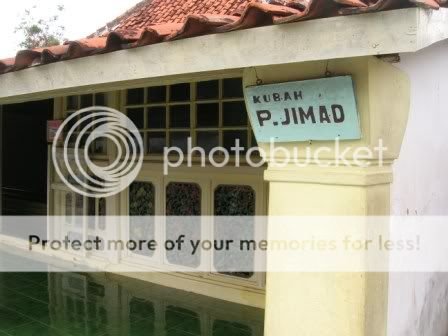
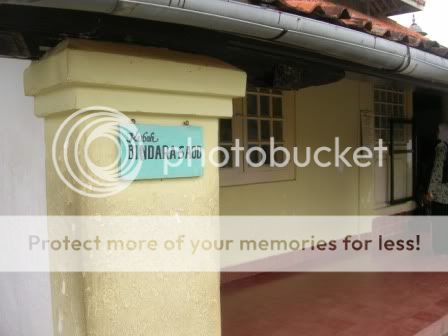
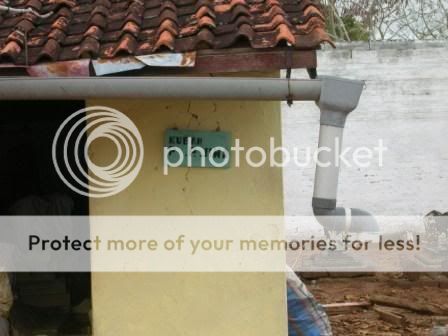
Pangeran Panji Pulang Jiwa has made me peevish? Yes!.
Listen, there is a myths in Sumenep that if we take pictures of inside graveyard, our camera or the results will be broken. I don't believe it!.
Mummy's told same thing too. She had ever come to this graveyard and taken some pictures, with analog camera. All the results were burnt. I don't believe it!.
And yesterday, with full of confidences I took the pictures of inside graveyard (the grave that has red blanket on the gravestone). And when I arrived at the grave of Pangeran Panji Pulang Jiwa, my camera battery was dropping out (I used the digital camera). My camera was broken after I took the Prince's grave. (>_<)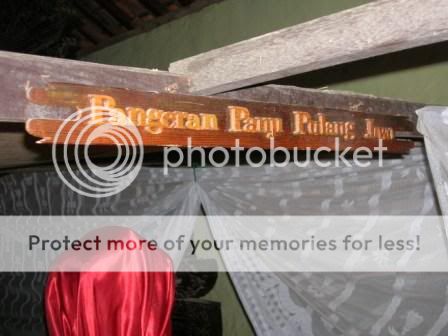
Can you imagine how irked I was? It so irked me!.
I took the MMC out from my digicam at once. Who knows what will happen to the memories?.
And I continued taking pictures of the graves by my phone camera. I don't care if my mobile broke. I just can buy the new one. I wouldn't miss this rare changes. I don't have idea when I will be back here again and taking pictures?.
You know? When we went down from the graveyard of Asta Tinggi, my digicam was back into normal again. (@_@)
Believe it, or not?You can also read this article in Indonesian, here...
Anda juga dapat membaca artikel ini dalam Bahasa Indonesia, di sini...